




For decades, packing retraction cord was the default way to manage gingival tissue before an impression. But cordless retraction — typically using an aluminum chloride paste — has become a popular alternative, especially as intraoral scanning has grown more common. So which technique actually fits your case?
Here’s how the two compare, and when each one makes sense.
How Cord Retraction Works
Cord retraction involves packing a knitted, braided, or twisted retraction cord — impregnated or non-impregnated — directly into the gingival sulcus. The cord mechanically displaces tissue laterally and, if impregnated, delivers a hemostatic agent to control bleeding and seepage at the same time.
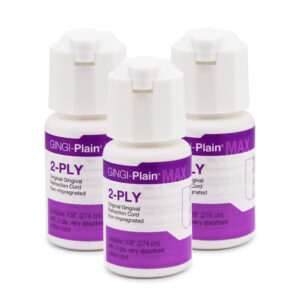
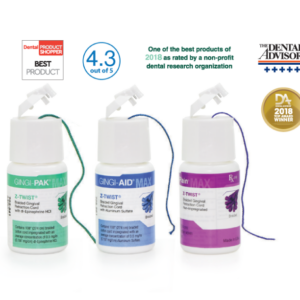
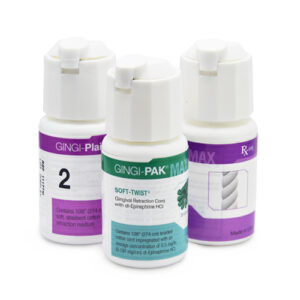
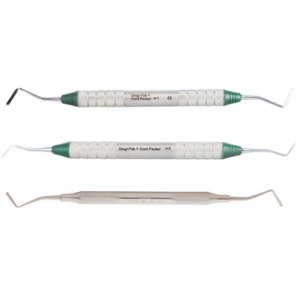
Products like Original Cord and Soft-Twist Retraction Cords remain a go-to for clinicians who want precise, mechanical control over sulcus width — particularly on deep or difficult subgingival margins.
How Cordless Retraction Works
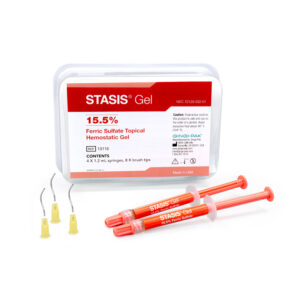
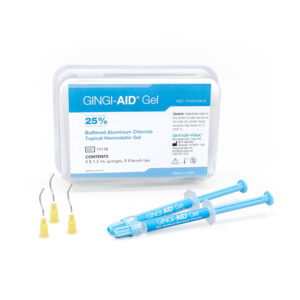
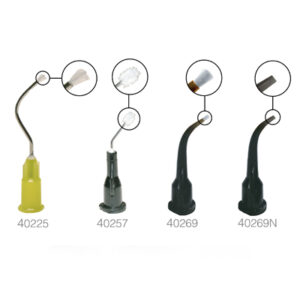
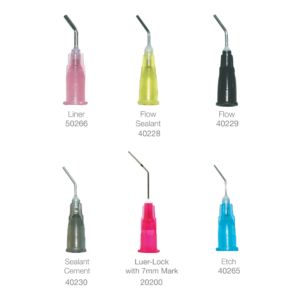
Cordless retraction uses a hemostatic paste — most commonly aluminum chloride — applied directly into the sulcus with a syringe tip instead of hand-packed cord. The paste is left in place for a short dwell time, then rinsed and dried before the impression or scan.
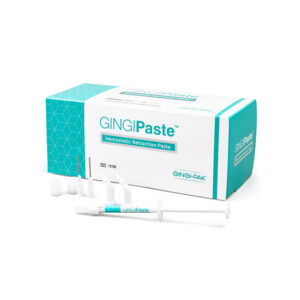
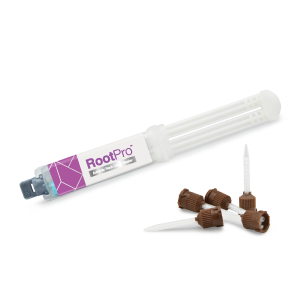
GINGIPaste™ Hemostatic Aluminum Chloride Retraction Paste is a common choice for this technique, offering tissue displacement and hemorrhage control without the manual packing step.
Chair Time and Technique Sensitivity
- Cord retraction takes longer to place correctly and has a real learning curve — over-packing can traumatize tissue, while under-packing won’t open the sulcus enough.
- Cordless retraction is generally faster to apply and less technique-sensitive, since there’s no manual packing involved. This can be especially useful in a busy schedule or when training newer team members.
Patient Comfort
Cordless paste is often better tolerated by anxious patients or those who find cord packing uncomfortable, since there’s no instrument pressure against the tissue. That said, modern cords — particularly softer knitted varieties — have narrowed this comfort gap considerably.
Depth and Predictability of Retraction
This is where cord still tends to have the edge. Cord retraction provides mechanical, sustained displacement, which makes it more predictable for deep or difficult subgingival margins. Cordless paste works well for shallow to moderate sulcus depths but may not achieve the same degree of lateral displacement on more challenging cases.
Can You Combine Both?
Yes — and many clinicians do. A common hybrid approach is to place a thin cord first for mechanical displacement, then apply retraction paste around it for additional hemostatic control before the final impression or scan. This combines the predictability of cord with the seepage control of a paste.
Quick Comparison
| Factor | Cord Retraction | Cordless Retraction (Paste) |
|---|---|---|
| Chair time | Longer, more technique-sensitive | Faster, less technique-sensitive |
| Patient comfort | Can cause pressure/discomfort if over-packed | Generally well-tolerated |
| Depth of displacement | Best for deep, difficult margins | Best for shallow to moderate margins |
| Best for | Complex crown & bridge cases | Routine cases, digital scanning workflows |
Final Thoughts
Neither technique is universally “better” — the right choice depends on sulcus depth, tissue health, your chairside workflow, and patient tolerance. Many practices keep both on hand and choose case by case, or combine them for the best of both approaches.
Explore Gingi-Pak’s full retraction product line — cord, cordless paste, and everything in between.