




Getting a clean, accurate impression starts long before the tray goes in the mouth. It starts with tissue management — and for most clinicians, that means packing a gingival retraction cord. But not all cords are created equal, and choosing the wrong size, material, or impregnation can mean the difference between a crisp margin and a remake.
This guide breaks down what actually matters when selecting a retraction cord, so you can match the right product to the right case.
What Does Gingival Retraction Cord Actually Do?
A retraction cord is packed into the gingival sulcus to temporarily displace soft tissue away from the tooth margin. This accomplishes two things at once:
- Widens the sulcus enough for impression material or an intraoral scanner to accurately capture the prep margin
- Controls minor bleeding and seepage when the cord is impregnated with a hemostatic or astringent agent
Without adequate retraction, even a well-prepared margin can produce a distorted or incomplete impression — and that shows up as a poor-fitting restoration at seat time.
Types of Retraction Cord
Knitted vs. Braided vs. Twisted
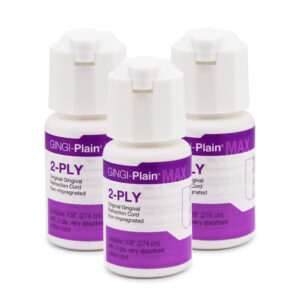
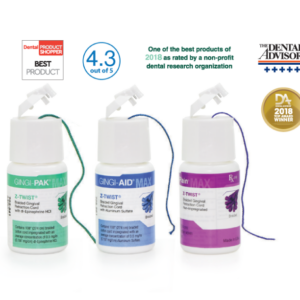
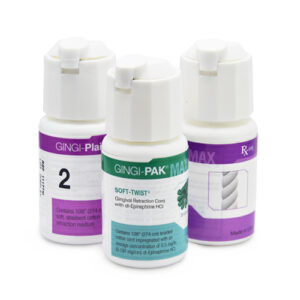
- Knitted cord (like Gingi-Pak’s Original Retraction Cord) tends to hold its shape well and expands uniformly when it absorbs moisture, which helps maintain consistent sulcus width around the entire prep.
- Braided cord is a common middle-ground option — flexible enough to pack into tight or curved areas while still holding form.
- Twisted cord is generally the most economical option but can be less predictable in how it expands, which matters more on subgingival margins.
Impregnated vs. Non-Impregnated
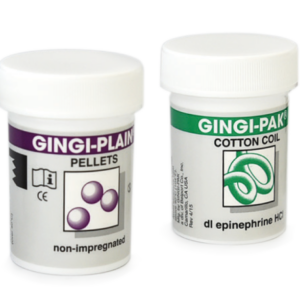
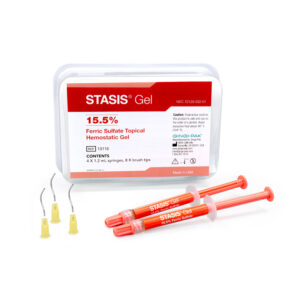
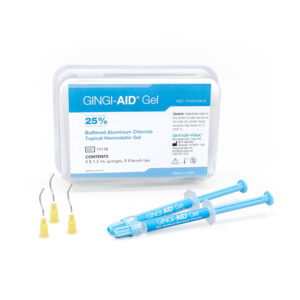
Non-impregnated cord provides retraction only. Impregnated cord is pre-treated with a hemostatic agent — typically aluminum chloride or racemic epinephrine — to control bleeding and crevicular fluid at the same time. For most crown and bridge procedures, impregnated cord saves a step chairside since you’re not applying a separate hemostatic solution.
Choosing the Right Cord Size
Cord is typically sized on a numeric scale (from very fine to thick), and size selection depends on the sulcus depth and the technique being used:
- Fine cords work well for shallow sulci, thin biotype patients, or as the first cord in a double-cord technique
- Medium cords are the most versatile, suitable for the majority of single-cord retraction cases
- Thick cords are reserved for deeper sulci or cases needing maximum tissue displacement
A good rule of thumb: if you’re fighting to seat the cord or blanching the tissue excessively, size down. If the sulcus isn’t opening enough for a clean impression, size up.
Single-Cord vs. Double-Cord Technique
- Single-cord technique is faster and sufficient for supragingival to slightly subgingival margins with healthy tissue.
- Double-cord technique uses a thinner cord packed first and left in place, with a second, larger cord packed on top and removed just before the impression. This method is often preferred for deep or difficult subgingival margins because it provides more predictable, sustained retraction.
Material Considerations for Sensitive Patients
Some patients — particularly those with cardiovascular conditions or epinephrine sensitivity — shouldn’t be retracted with epinephrine-impregnated cord. In these cases, an aluminum chloride–impregnated cord, or a non-impregnated cord paired with a separate hemostatic gel, is generally the safer choice. Always cross-check retraction cord ingredients against a patient’s medical history before selecting your product.
Quick Reference: Matching Cord to Case Type
| Case Type | Recommended Cord |
|---|---|
| Shallow margin, healthy tissue | Fine, non-impregnated or aluminum chloride |
| Standard crown prep | Medium, aluminum chloride–impregnated |
| Deep subgingival margin | Double-cord technique, fine + medium |
| Patient with epinephrine sensitivity | Aluminum chloride–impregnated (no epinephrine) |
| High-bleeding tissue | Racemic epinephrine–impregnated |
Final Thoughts
The right gingival retraction cord depends on sulcus depth, tissue health, technique, and patient medical history — there’s no single “best” cord for every case. Keeping a range of sizes and impregnation types on hand gives you the flexibility to adapt chairside rather than compromising on margin visibility.
Browse Gingi-Pak’s full line of retraction cord to find the right size and impregnation for your next case.